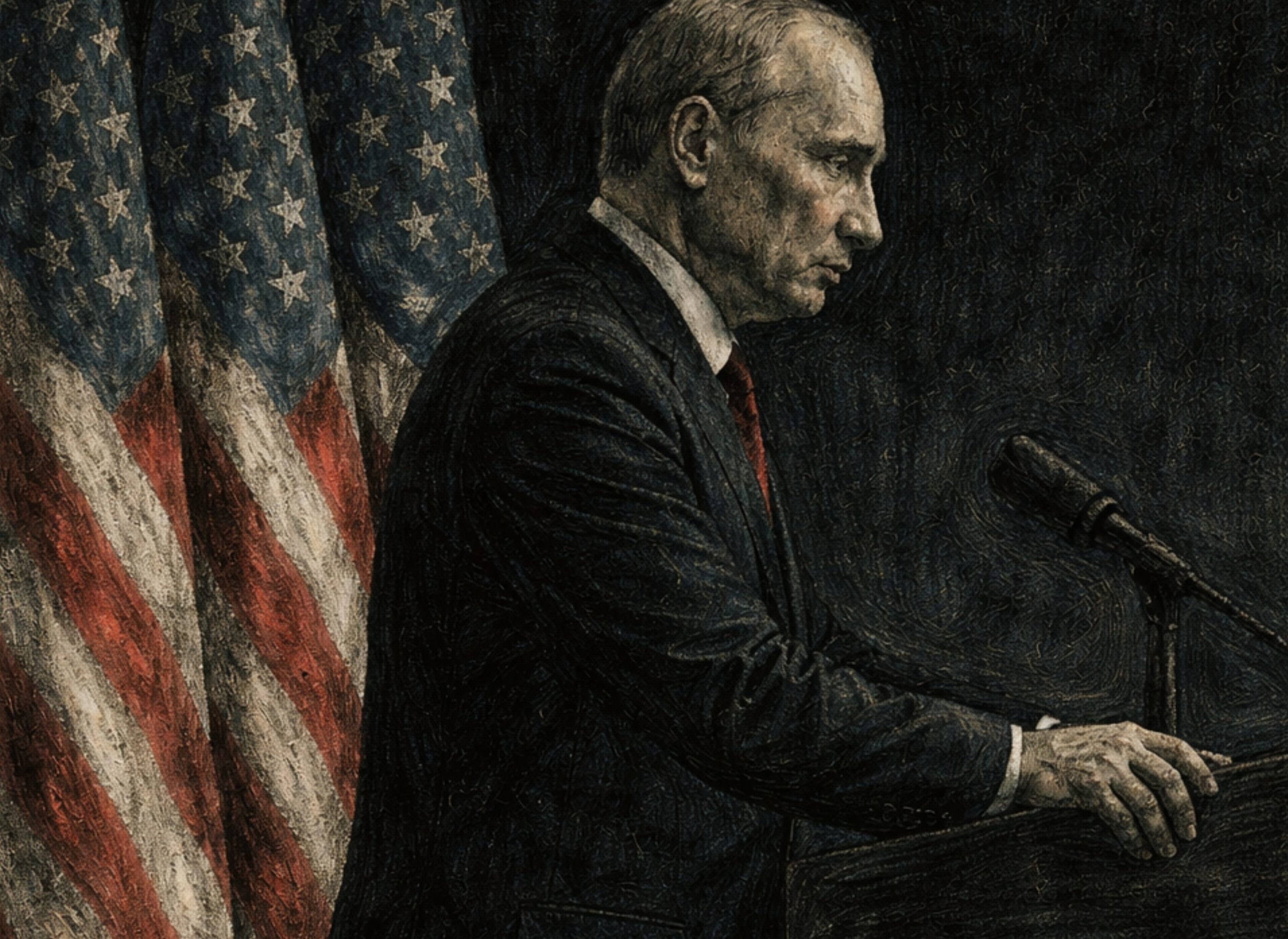
Putin’s Unfinished Business with America
Why the Cold War Never Ended in the Kremlin
By | Jacob Bosen,
DECEMBER 24, 2025
Janury/February 2026
The fall of the Soviet Union still lingers as a disaster in the minds of the Russian elite. The vast communist empire sought to spread its influence and power throughout the world. Creating an ideological battle against the free world, the Soviets used coercion and manipulation to achieve their goals. Comprehensive measures taken by the United States and the West to speed up the collapse of the Soviet system led to its ultimate demise. 1991 saw a world of transformation—the fall of what President Reagan described as the “Evil Empire.” Along with its fall, embarrassment and the yearning for revenge soon followed as a goal of the Russian leadership.
As the Soviet flag flew for the last time above the Kremlin, a figure yet to be well known was making his way onto the political scene in Saint Petersburg. Vladimir Putin witnessed the chaos that unorganized decentralization and lack of political legitimacy brought to Russia. Entire nations were lost, markets struggled, and political instability followed. Putin viewed the collapse of the Soviet state as a geopolitical disaster and a historical marker to be corrected. Slowly working his way up the political ladder in Russia, Putin’s true intentions and goals have shown themselves gradually.
Russia’s war in Ukraine, campaigns targeted at eroding American global leadership, cyberattacks, disinformation and misinformation campaigns, energy coercion, and the amplification of political polarization are all ways Russia is trying to get its revenge. The perceived humiliation of the Russian nation by the United States and its Western partners has shaped Russia’s foreign policy under President Putin.
After the Fall
The 1990s brought sudden irrelevance to Russia on the global stage. The United States and its Western partners came out of the Cold War as victors, while Russia quickly became a downgraded world power. How the West attempted to help Russia only made matters worse and helped cement the grudge held by the Russian leadership, including Putin. Russia was forced into a vulnerable position where it was told what to do and how to do it.
For many within Russia’s military, intelligence, and political circles, this sudden loss of status was not merely a geopolitical setback but a personal humiliation. Officials who had once commanded global respect now watched their country struggle for relevance, dependent on Western loans and advice. The psychological shock of going from a fearsome superpower to a struggling state fueled a deep resentment toward the new world order dominated by the United States. This resentment became a formative experience for the rising generation of Russian leaders, shaping a conviction that the West had taken advantage of Russia’s weakness and that restoring lost prestige would require confronting, not cooperating with, the United States.
The fall of the communist system in Russia was quickly met with the liberalization of markets and institutions. The International Monetary Fund (IMF) instituted shock therapy with the hope of taking the once centrally planned economy to a free market. As well-intentioned as it may have been, Russia lacked institutions protecting property rights, contracts, and investments. The mass and swift privatizations took the unprepared culture and society by surprise and allowed corrupt individuals to take advantage. The rise of oligarchs in Russia was soon set to the new normal.
Western governments did not do enough to assist Russia in covering budget deficits. This caused the Russian government to dramatically increase the money supply to cover debts. In conjunction, the reduction of price controls set off hyperinflation because the fake and centralized economy was no longer reducing actual demand. The West pushed for reform but did not do enough to ensure Russia had the capacity and institutions required for a flourishing free market. All the while, U.S. and Western media portrayed the entirety of Russia as a “defeated empire.” Instead of taking direct aim at the former communist government, the West lumped the people of Russia in with the actual enemy. The idea and reality of defeat continued to conjure feelings of revenge among the new and upcoming Russian leadership.
President Boris Yeltsin sought closer ties with the United States and the West despite the economic hardships that reform was causing. Russia soon entered into a subordinate relationship with the West, where Russia was in the position of being a junior partner. IMF shock therapy threw millions into poverty and helped create the rise of oligarchs who took advantage of the regular Russian. To solve these problems, the Russian people looked for new leadership and answers. They wanted someone who could bring strength to the nation’s leadership.
Vladimir Putin rose to reject the Western alignment of the Yeltsin era. Promising to counter corruption and chaos, Putin assured the Russian people that he could bring the nation stability. Taking firmer positions than Yeltsin, Putin diminished the political power of oligarchs and sought foreign policies that were viewed to be better aligned with Russian national interests. These actions put Russia once again at odds with the United States and its Western partners. Putin capitalized on the yearning among the Russian people to once again be a nation that captured global importance and prestige. This reconstruction of national identity saw the United States and the West as the principal architects of the Russian struggle to regain a footing.
The NATO Question
U.S. Secretary of State James Baker assured the Soviet leaders in 1990 that NATO would not expand an inch east of Germany after the conclusion of the Cold War. Having confidence in his word, Mikhail Gorbachev trusted his Western counterpart and continued in negotiations with the West. After the fall of the Soviet Union in 1991, its satellite states gained independence. The United States and its European partners saw the opportunity to guarantee security for the rest of Europe. NATO has expanded eastward seven times since 1999. This consistent expansion over a few decades has conjured anxiety and mistrust among the Russian elite in their view of the United States and its European partners. Russia has been outspoken in its objections.
Despite Russian opposition to NATO expansion, NATO leadership has stressed its open-door policy. Additionally, the alliance’s leadership has tried to assure that NATO is solely a defensive alliance with the purpose of deterring an aggressor from attacking its member states.
Whether or not NATO is a threat to Russia in reality, it does not matter. The Russian leadership views NATO as a threat. Defensive measures taken by an enemy can appear to be offensive in nature. Perceptions are everything. President Putin has viewed the many rounds of NATO expansion towards the borders of Russia as a military provocation. Talks of expanding NATO to Georgia and Ukraine have certainly hit a nerve among Russian leadership. Despite many other factors and the roots of causation, Russia has largely used the possibility of NATO membership as a reason to invade both countries.
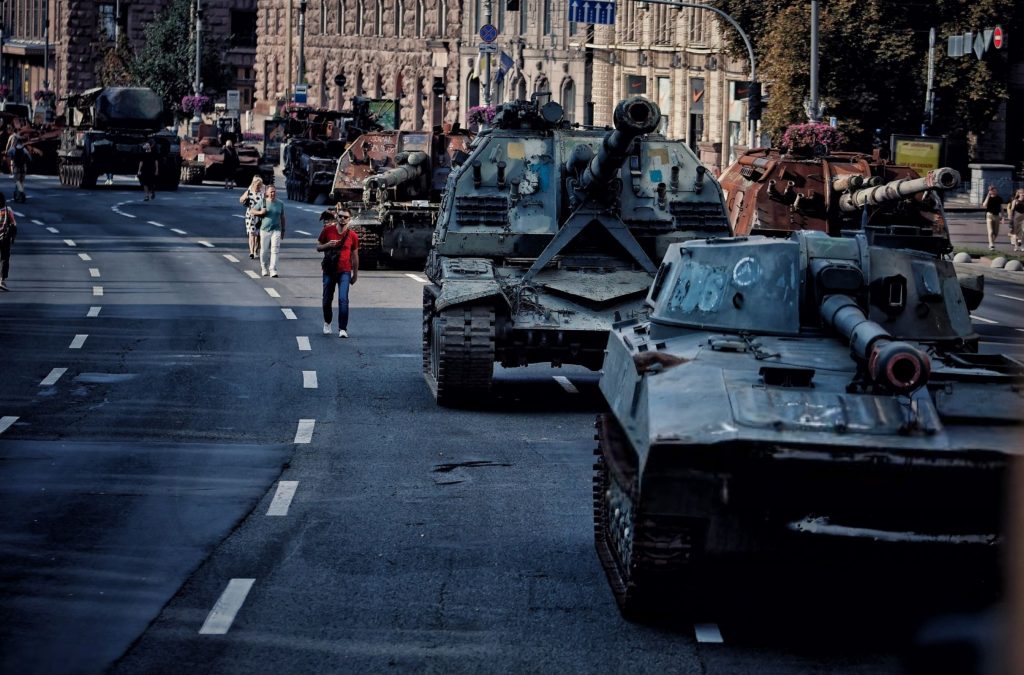
Tsarist and Soviet nostalgia in Russia has strong roots. Russia’s invasion of Ukraine is trying to establish a new Great Mother Russia. Ukraine is a land that many Russians consider to be theirs on historical and cultural levels. Russia considers Ukraine to be in the near abroad—a land that once was a part of the Soviet empire.
In Putin’s mind, Ukrainian identity has also been an artificial product of the Austrians in the 19th century, the Poles and the British in the 20th century, and the United States more recently. President Putin does not view Ukraine as a legitimate and separate nation from Russia. To President Putin, Russians and Ukrainians are the same people, despite constant attacks on Ukrainian civilians by the Russian military. Russian leadership has described Ukraine as Russia’s “little brother.” Starting in 2001, Putin has been concerned that Russia was losing Ukraine and that it must do something to prevent the United States and Europe from pulling Ukraine out of Russia’s influence. Color Revolutions rocked Ukraine, making it politically unstable all the way up to 2014.
In 2014, a pro-Western government was established in Ukraine after the Revolution of Dignity. This new government took harsh stances against Russia and oriented itself to EU and NATO membership. Because of this, Russia viewed losing its Sevastopol naval base in Crimea as a possibility. Taking action to prevent this, Russia invaded and annexed Crimea; Putin asserted that if Russia did nothing, NATO warships would have been docking in a geostrategic city once part of the Russian Empire. Additionally, Russia backed separatists in Eastern Ukraine who opposed policies that pulled Ukraine closer to the West. Weeks after initial separatist movements gained momentum, Russia moved its own troops into Ukraine to fight the new government.
What can be seen as an initial civil war turned into Russia waging war directly against Ukraine starting in 2014. Since then, two peace agreements have been instituted, and both have failed to stop the fighting. Putin’s decision to do a full-scale invasion of Ukraine in 2022 was a culmination of centuries-long held viewpoints and an attempt to test the cohesion of the West.
Russia’s efforts at cementing these viewpoints among its political elite and average citizens are paramount. Anti-Americanism has been institutionalized in Russian media, education, and military doctrine. President Putin views the Russian Empire as having been taken, and it is to be reestablished under his leadership. Not only reestablishing the Russian Empire, Putin seeks to destroy the United States and the West from within. Russia has advanced its tools of statecraft and has been gradually gaining ground in pursuit of a long-game victory. In his mind, this is the ultimate piece of revenge that can be taken against the United States and the West.
Russia’s aim is not victory against the United States, but to cause its erosion.
This sense of perpetual betrayal has become the ideological glue binding Russia’s political elite together. Within Kremlin circles, every Western action is filtered through a narrative of deceit and encirclement. The collapse of the Soviet Union is framed not as an internal failure, but as the result of Western sabotage. NATO expansion is portrayed not as voluntary alignment by sovereign states, but as a deliberate plot to suffocate Russia. Economic sanctions are depicted as proof that the West fears Russia’s resurgence. This worldview leaves no room for compromise or trust, because any concession is interpreted as weakness and any negotiation as a trap. By institutionalizing betrayal as a core doctrine, the Kremlin ensures that hostility toward the United States is not merely a policy preference but a foundational pillar of the modern Russian state.
Weakening America from Within
The Russian state and its intelligence services seek to destroy the United States from within. In its strategic mind, taking divisive issues that already exist and amplifying them is a paramount opportunity. Harboring distrust of government, pushing ethnic conflict, supporting extremist groups, and creating disinformation campaigns are all operations that the Russian government has directed. The main goal of its efforts is to cause polarization on a political and cultural level to the point of creating another civil war.
Russia carefully chooses events that have a wide political and cultural impact in the United States to pursue. The spread of disinformation and the creation of conspiracy theories are the goal in order to cause division and mistrust. Issues like the attacks of September 11, 2001, foreign interference in the 2016 election, the birthplace of President Obama, the Black Lives Matter riots, and the assassination of Charlie Kirk are only a few examples that the Russian state has latched onto to promote contention and disinformation.
Russia seeks to exploit perceived American hypocrisy around the world. Whether the hypocrisy is real or not, Russia takes advantage of it. Russia amplifies the actions of the United States in Iraq, in Guantanamo, and the armed exportation of democracy around the world. The perception is painted that America does not practice what it preaches to other countries. Russia’s aim is to undermine the credibility of liberal democracy around the world.
Domestically, the decrease in the quality of life, ethnic tensions, government oversight, financial turmoil, and political divisiveness are points of target. The openness of the United States through free media and an open society allows it to be vulnerable to outside influence. Russian influence operations penetrate American society by sneaking through the cracks of some of its greatest strengths.
Russia’s aim is not victory against the United States, but to cause its erosion. It wants to erode the United States quickly enough to see if the Russian state can outlast it. The steadiness of the Russian state and its form of authoritarian government is prepared to play the long-game against the United States. The options to meet those priorities are in its focus.
Russia’s strategy is rooted in the belief that democratic societies are inherently impatient, fractured, and vulnerable to exhaustion, while authoritarian regimes can endure sustained pressure with fewer political consequences. The Kremlin is betting that time itself is a weapon. The longer conflicts drag on, the more Western unity will erode as elections shift priorities, economies tighten, and publics lose interest in distant struggles. By contrast, Putin calculates that his own political system can absorb economic pain, international isolation, and even battlefield losses so long as the state maintains tight control over information and dissent. This asymmetry of endurance is central to Russia’s long-game approach: Moscow does not need decisive victories, only incremental advantages and moments of Western indecision. Over the span of years or decades, Russia hopes that this slow grind will weaken the institutions, alliances, and democracies that form the backbone of U.S. power.
What Putin Wants
As poetic justice for the collapse of the Soviet Empire in 1991, Putin seeks the collapse of U.S. hegemony. Russia does not seek Western approval, but wants to see its decline. Attempts by President Trump to use business opportunities and trade as leverage in mending relations with Russia and stopping the war in Ukraine have been shortsighted. Russia does not want partnership with the United States. Partnership opens Russian society to penetration from the United States, and that is a threat to the authoritarian nature of its state.
Operating as another trigger for the decline in U.S. hegemony, Russia seeks to create a multipolar world. In the effort for revenge, not vision, Russia wants to create a world where it is more difficult for the United States to exert its influence. The more major powers that there are in the world, independent of Western values, the harder that it will be for the United States.
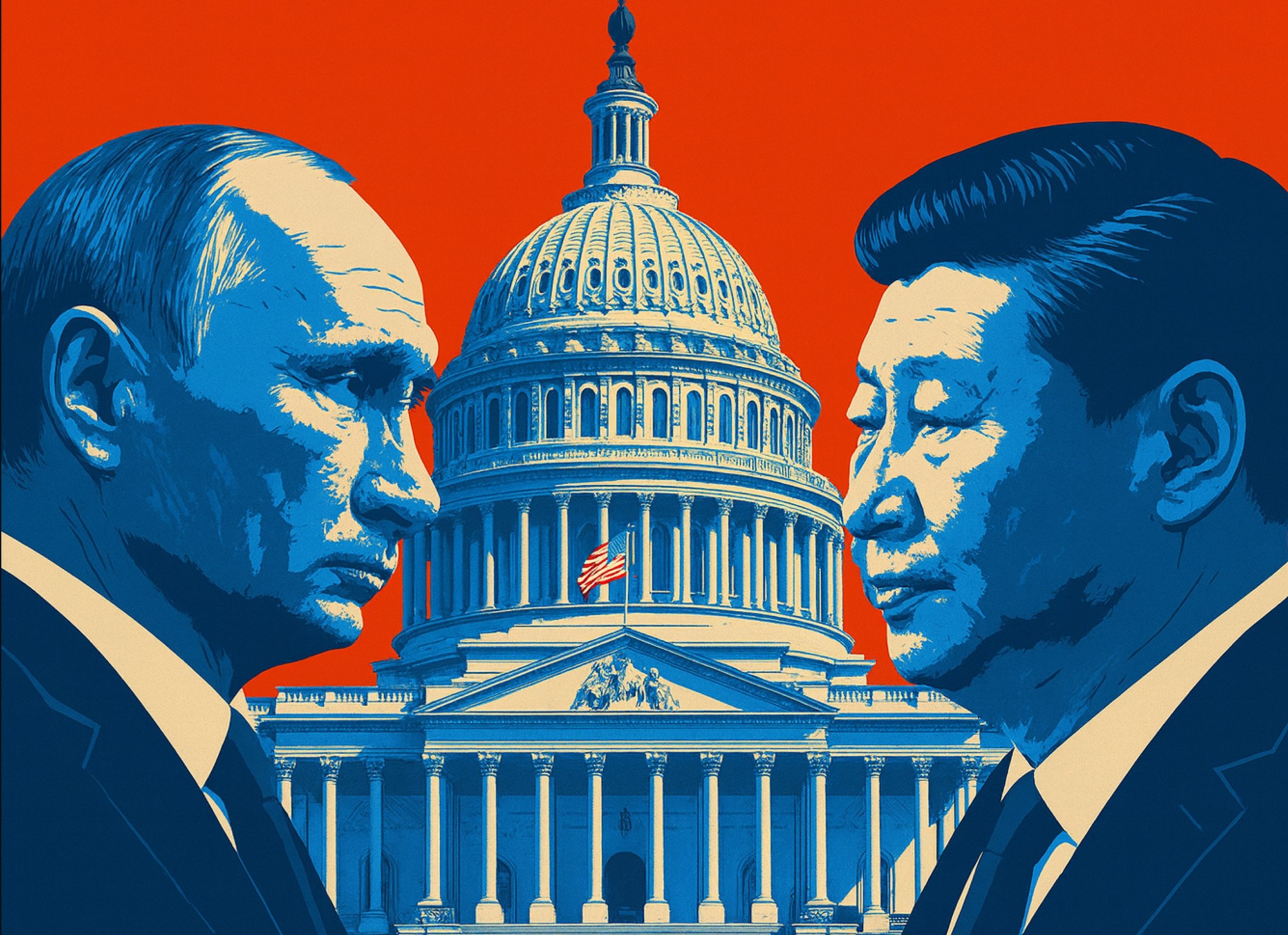
The success of the Russian state relies on the destruction of the current world order. The nature of the state restricts it from fully engaging in the established world order and places pressure on it from the outside. In the effort of overthrowing the existing order, Russia is looking toward China, Iran, North Korea, and other BRICS partners to counter the United States and the West.
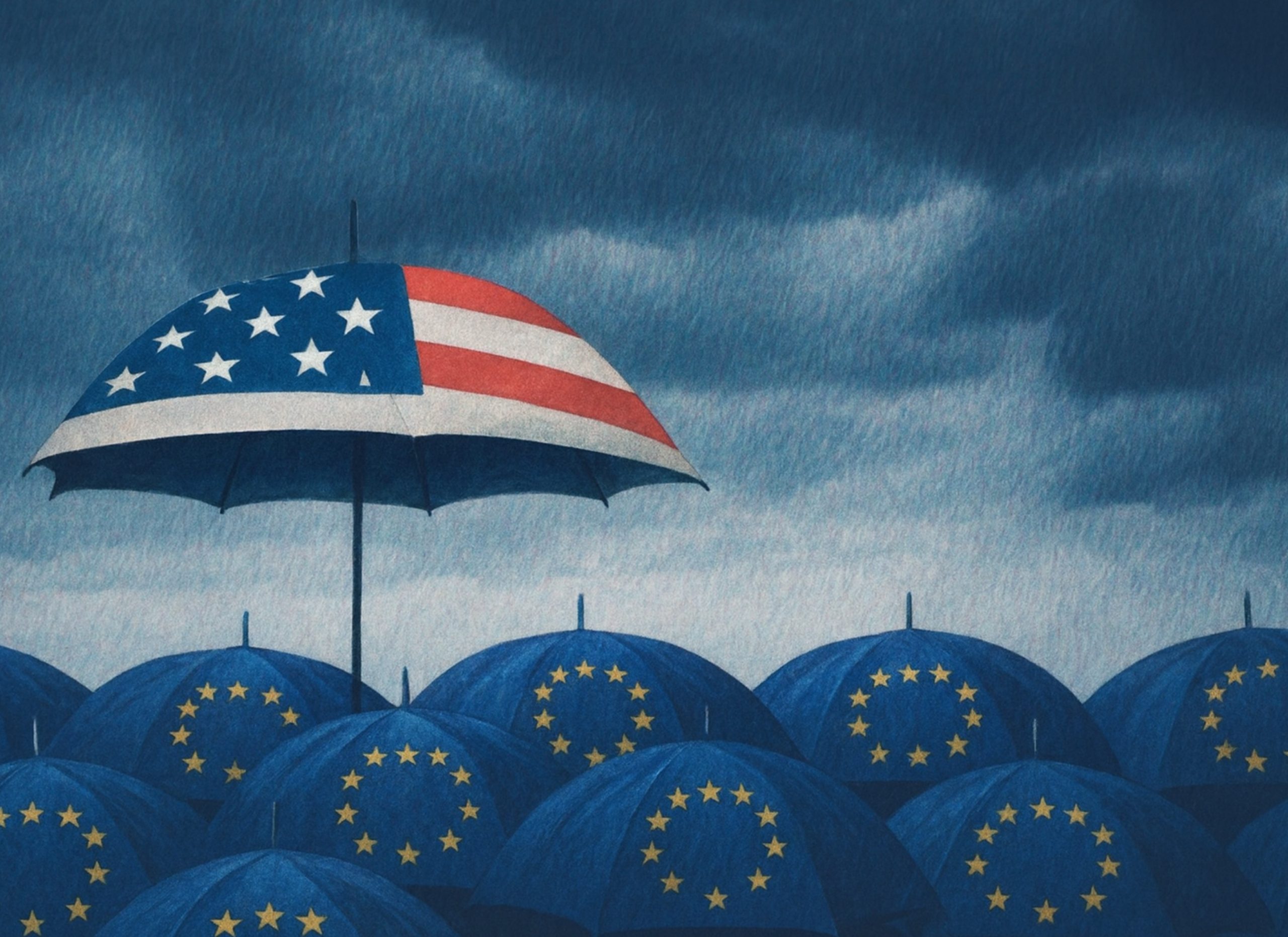
The pursuit of relationships with BRICS members seems to be more aimed at taking influence away from the United States rather than developing lasting relationships and systems with those members. For example, despite claiming to have an outstanding friendship with China, Russian and Chinese intelligence services treat one another as enemies. The artificial core of these efforts still threatens the United States. The United States has retrenched from the world and has taken more isolationist positions. These actions have created a vacuum that is being filled by Russia and its partners.
The Russian government engages the established system with constant provocation and denial of provocation. Russia’s actions taken in Ukraine are twisted to fit the narrative of defense. In the minds of the Russian leadership, that may be true, but there is a method to the madness. This cycle of confrontation helps create domestic legitimacy in Russia because there is always a monster to destroy. State-run media portray Ukraine as a Nazi-led, totalitarian state that threatens the very existence of Russia. Once the narrative is created, Russia is able to justify anything to its people.
Beyond justifying its foreign policy, the Kremlin’s construction of an all-powerful external enemy has also become a critical tool for maintaining control inside Russia. By portraying the United States and its allies as relentless aggressors seeking to dismantle Russia from within, the government creates a permanent state of national emergency—one in which dissent can be dismissed as treason, opposition figures can be branded as foreign agents, and economic hardship can be reframed as the necessary price of survival. This narrative gives Putin the political space to consolidate power, suppress civil liberties, and silence critics while claiming to defend the homeland. In this environment, any failure is blamed on Western sabotage rather than domestic dysfunction. The existence of a hostile West thus becomes essential to sustaining Putin’s legitimacy, allowing the Kremlin to depict its authoritarianism not as a choice, but as a patriotic duty in the face of an existential threat.
Yesterday’s Humiliation, Today’s War
President Putin’s foreign policy is built on memory, not foresight. The turmoil of the 1990s left a stain on the Russian psyche and leadership is determined to wash it off. The humiliation that the Russian nation faced after the collapse of the Soviet Union drives its foreign policy objectives. World and regional domination were in its sights and it is returning to that goal. Until the trauma is addressed, Russia will continue to spread conflict throughout the world. The West must understand that in Putin’s mind, the Cold War never truly ended—and the real enemy has always been the United States. It’s time to increase pressure on the Russian state, not do the opposite.